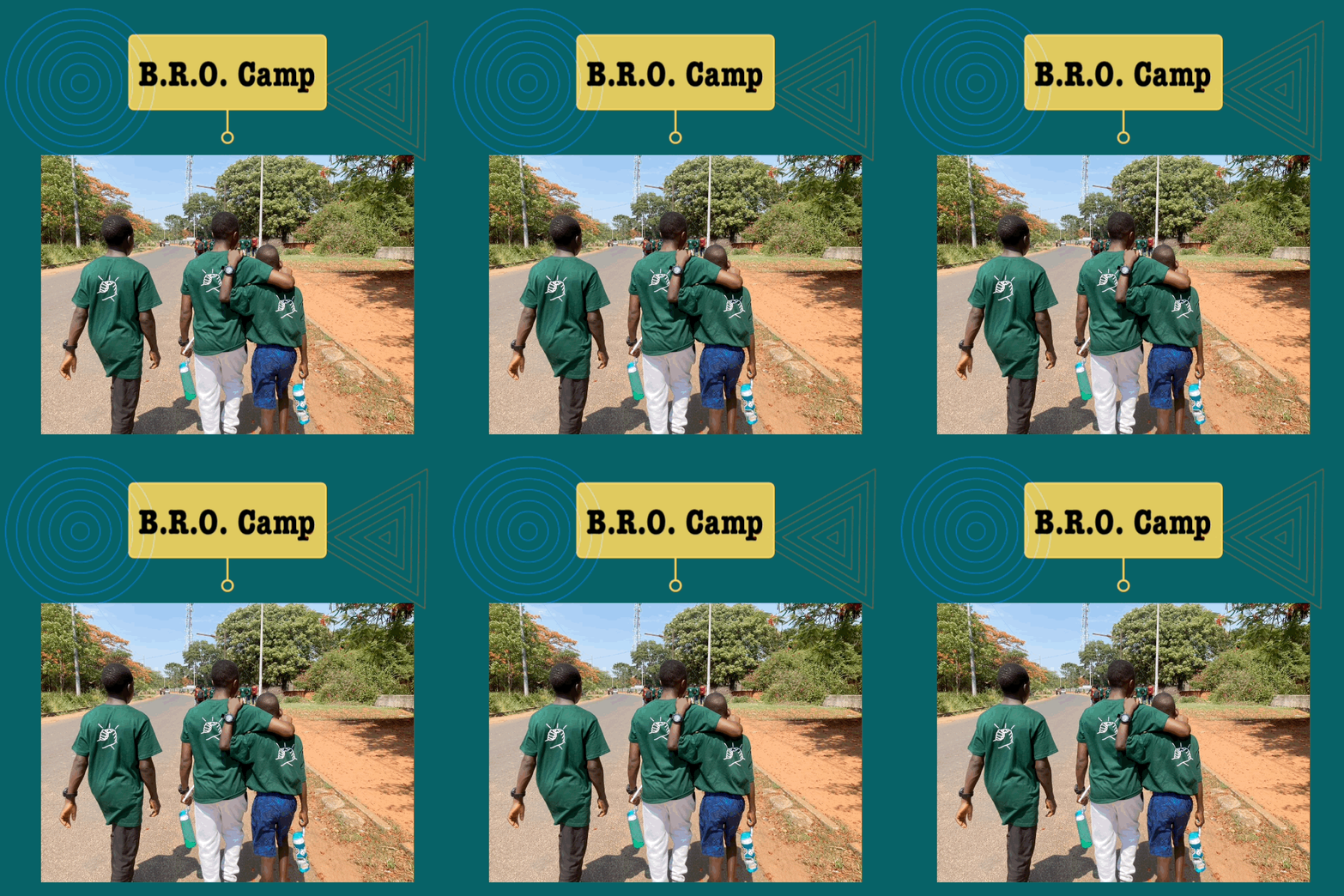
We ended our year with an all-boys camp. Originally, we planned for an all-girls camp but shifted our focus to the boy-child after hearing the community’s concern about the boy-child being forgotten and not included in programming equally as their female peers. Unfortunately, for some time in my host country, the boy-child has not received targeted interventions from local and international organizations like their female peers. But, for obvious reasons. To name a few, in this region, adolescent girls and young women have suffered the most from HIV infection, teen pregnancy, child marriage, and gender-based violence.
One of many global responses to this reality is interventions aimed at empowering the girl-child and creating safe spaces to access services. For example, in 1995 Peace Corps Volunteers located in Romania developed a curriculum, Girls Leading Our World (G.L.O.W.) with their community members. The purpose of the curriculum is to help young women build self-esteem, increase self-awareness, develop assertiveness, goal setting, and career planning. The lessons are delivered through an overnight camp format and a complementary school club is offered. The lessons offered are beneficial to many young women, but, in my opinion, the intervention is incomplete without engaging adolescent boys. Many of the challenges girls and young women experience in this region are perpetrated by young men. As one community member put it, we created a community of educated, informed, and confident young women who excel academically and professionally, yet the boy child is left to figure it out. What will happen to our communities if we don’t invest equally in boys and girls?
Aiming to only initiate community-driven ideas, we held an all-boys camp modeled after the Boys Respecting Others (B.R.O.) curriculum created by Peace Corps Volunteers in 2014 with their community members in the Kingdom of Swaziland. The curriculum strives to uplift young men and teach them to respect young women, themselves, and their communities. The campers are equipped with leadership skills to launch B.R.O. clubs in their schools.
In December we hosted the first B.R.O. camp in our community with 21 students, ages 13 – 15 years for 5 nights. We engaged with Grassroots Soccer, an adolescent health organization to lead sessions on gaining consent in sexual relationships, managing anger, dangers and consequences of substance use, and avoiding HIV infection. We also engaged local professionals to enrich our sessions and provide local context to specific issues. Our campers participated in a community service activity where they learned basic masonry and sign-writing skills. They attended a field trip to a local fish farm to learn about the fish farming business. The final night ended with a brotherhood candlelight ceremony where campers shared their thoughts and feelings about their camp experience.
We selected the best camp counselors and mentors to staff the camp. They sacrificed five nights away from their families to provide a memorable experience for our campers. The camp mentors were grade 12 and 11 students who participated in the Debate club held in the previous term. I wanted to further engage them and give them another opportunity to exercise their passions and skills. I continue to receive messages regularly from the camp mentors reflecting on their camp experience and their desire to support the next camp!


 jess•make•room
Leave a comment